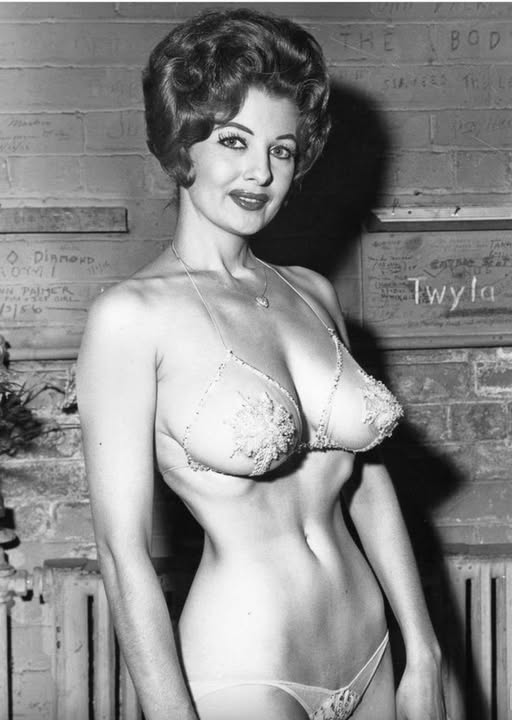
She began life as Annie Blanche Banks, born on Leap Day, 1928, in Eastman, Georgia—a place marked by poverty and abuse. At fourteen, she ran away and married a Marine simply to escape. The marriage was annulled the next day. At fifteen, she tried again, this time with a shoe salesman, but the restlessness never faded. She wanted more than survival—she wanted Hollywood.
Los Angeles gave her a new beginning and a new name. A casting agent offered her two choices: Sunny Day or Tempest Storm. She chose lightning over sunshine. While working as a cocktail waitress, a customer asked if she did striptease. She didn’t even know what that was—but a few months later, she learned, and discovered she could turn an entire room into silence with just a glance and a slow turn.
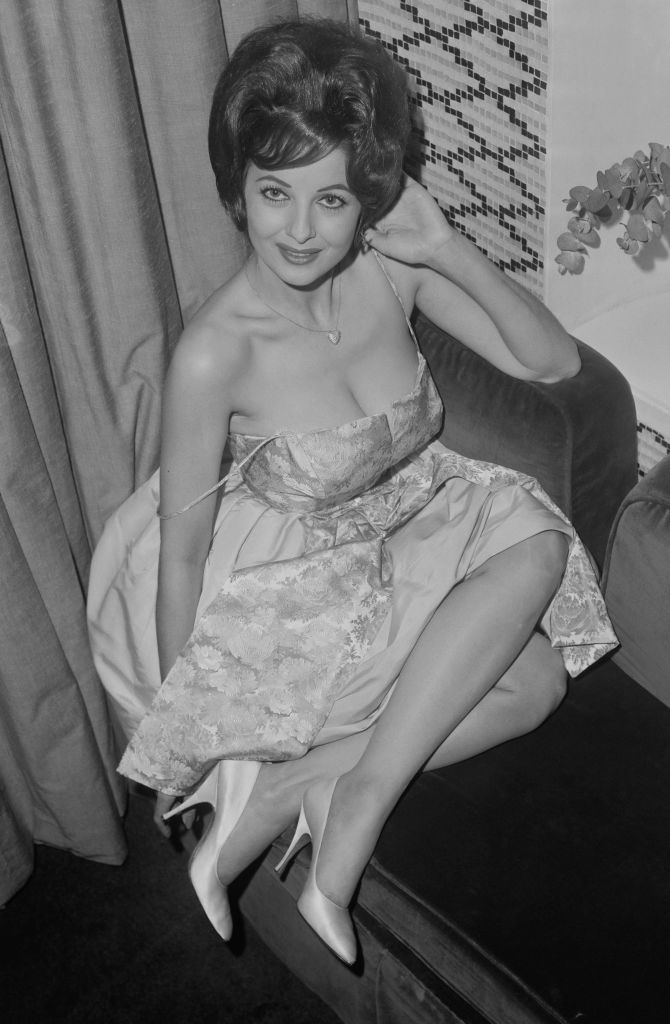
By the late 1940s, Tempest Storm was onstage; by the mid-1950s, she was a headliner. Her performances were elegant and hypnotic—more glide than grind, more tease than strip. She ruled the burlesque world with rhinestones, gowns, choreography, and total command of her audience. Lloyd’s of London reportedly insured her famous curves for a million dollars, and she earned around $100,000 a year—roughly a million today. The press couldn’t resist her, dubbing her “Tempest in a D-Cup.” She shared marquees with icons like Blaze Starr and Lili St. Cyr, and appeared in cult burlesque films such as Teaserama (1955) and Buxom Beautease (1956) alongside Bettie Page.
Behind the glamour, she lived with remarkable discipline: no smoking, no alcohol stronger than 7-Up, mornings of granola, and daily sauna and massage sessions. She refused plastic surgery, proudly insisting that what nature gave her was enough. Her fame occasionally caused chaos—at the University of Colorado in 1955, a crowd of 1,500 students nearly stampeded just to catch a glimpse of her.
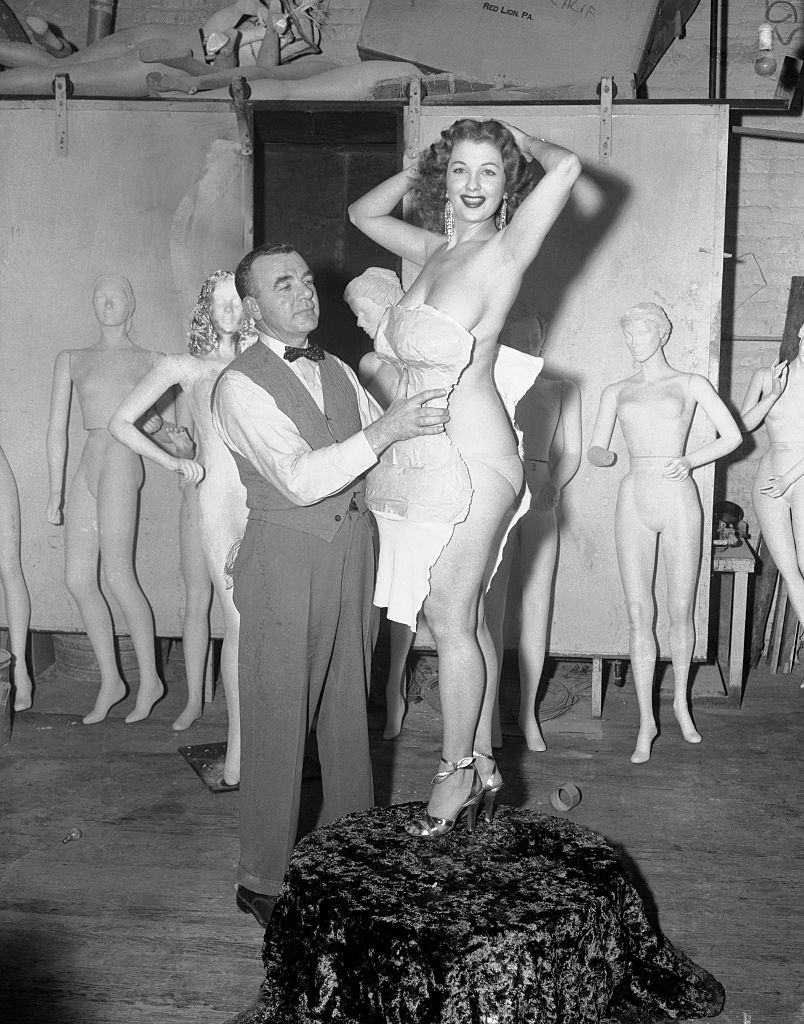
Her personal life was as electrifying as her stage presence. She was linked romantically to Elvis Presley, Mickey Rooney, and mobster Mickey Cohen. In 1959, she married jazz singer Herb Jeffries, Hollywood’s first Black singing cowboy. Together they had a daughter, Patricia Ann, and broke racial barriers that were still taboo in much of America at the time. Their union cost her work in certain states where interracial marriage remained illegal, but she never expressed regret.
While many stars faded, Tempest refused to dim. She continued performing well into her sixties and even returned to the stage in her eighties, proving that allure and artistry don’t come with an expiration date. In 1999, San Francisco declared “Tempest Storm Day” when she headlined the O’Farrell Theatre’s 30th anniversary. She remained a beloved figure at Burlesque Hall of Fame events through the 2000s, and a 2016 documentary—Tempest Storm—offered an intimate look at the woman behind the legend.
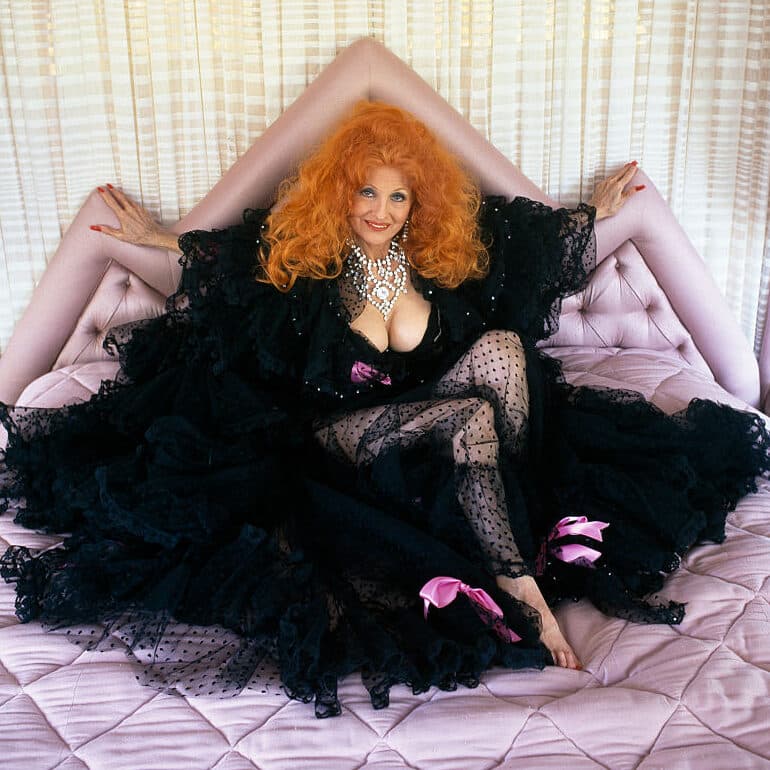
She spent her later years in Las Vegas, where she died in 2021 at ninety-three. But Tempest Storm left far more than sequins and stage lights behind. She embodied the belief that sensuality can be art, that confidence can be defiance, and that glamour can be its own kind of armor. Modern performers like Dita Von Teese cite her as a muse for a reason: Tempest Storm didn’t just ride the cultural wave—she reshaped it. Unstoppable, unforgettable, and true to her name, she remained a force of nature until her final bow.